A Recipe for Disaster!

What would you do if your true passion left a trail of death and destruction behind?

You may have heard of Typhoid Mary, whose love of cooking did just that…
OLYMPUS DIGITAL CAMERA

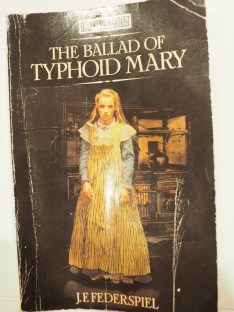
I found this gem of a book in a little second hand bookshop in Glasgow a couple of years ago: J.F. Federspiel’s reimagining of the life of Mary Mallon in ‘The Ballad of Typhoid Mary’. What a nickname to be remembered by! – but unfortunately for Mary and all of her unintentional victims, a very accurate one.

Federspiel, with a bit of poetic license, introduces us to Mary, or Maria Caduff as he imagines her to be, a young Swiss immigrant on the ‘Leibnitz’ ship which docks at New York in 1868, bringing a spectacle of horrors with it as 108 of its 544 immigrants have succumbed to an epidemic. “Plague on board!” holler the newsboys, as Maria is taken in by Dr Dorfheimer, and starts to cook and clean for him. Unbeknownst to Dorfheimer, and to Maria herself at this time, she carries the deadly illness which decimated the Leibnitz passengers, but is herself immune.

This extraordinary story chronicles Maria’s life as she adopts a new identity of an Irish immigrant, Mary Mallon, travels through various jobs in New York “like an angel of death”,  doing the thing she loves most of all – cooking – and almost invariably passing on the infectious germs of Salmonella typhi, or typhoid fever, whilst doing so. Even to her contemporaries, the legend of Typhoid Mary becomes one of nightmares. “Typhoid Mary … a grim-looking cook with gnashing teeth and saliva dripping from her mouth into a steaming, poison-green cauldron.” How uncomplimentary!

Typhoid Mary.jpg

Federspiel’s story jumps between a narrative of Mary’s life, and the soliloquy of the paediatrician Dr Howard Rageet presumably writing a biography of Mary in the 1980s. Although this feels to me to be a clumsy method of storytelling, this approach does allow Federspiel to comment retrospectively on the medical facts around typhoid, as well as his semi-fictional historical narrative, so it does add useful perspective to the story.

Lorem Ipsum (2016) Mallon-Mary 01.jpg at Wikimedia Commons

How accurate are the depictions of typhoid? Kudos to Federspiel, he’s done his homework and his descriptions are pretty spot on! Almost without fail, all of Mary’s victims fall ill within 1 to 3 weeks of her arrival into their service, and they tend to suffer from the typical symptoms of typhoid including a high fever, nausea, delirium and voluminous diarrhoea. The death rates are fairly high, up around 10-20% as would have been expected in the pre-antibiotic days. Dr Rageet notes the transmission of typhoid is water and faeces-borne.

All good things must come to an end….before too long the public health authorities get wind of Mary’s accidental secret ingredient, arrest her and isolate her in prison. They prove she is a typhoid carrier, someone who carries the bacterium without themselves becoming sick, but who can pass this on to susceptible people, by finding the typhoid bacteria in samples of her urine and faeces – as per Mary’s medical report below.
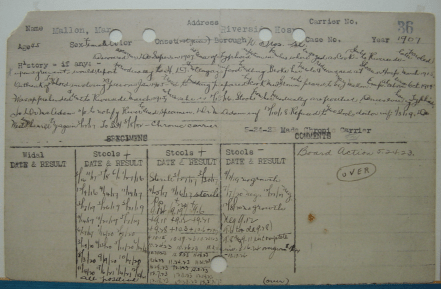
Stool chart Mary Mallon

Jtamad (2015) MaryMallon.stoolreport.1907.png available at Wikimedia Commons

After much legal uproar, Mary is finally freed and agrees not to cook for anyone else. She doesn’t stick to this promise, unfortunately, and causes an outbreak in a large women’s hospital which gets her noticed again, and this time she is isolated until her death from complications of a stroke more than twenty years later. Poor old Mary!

All in all, this is an intriguing and enjoyable little read which chronicles a fascinating era in history, at a time just before the advent of antibiotics which would have dramatically changed the outcome. Makes me glad to live in a time where health and safety is now known to be so crucial in preventing disease transmission, and where the Typhoid Marys of today can receive treatment to ensure they don’t spread the disease!

Have you heard of Typhoid Mary, or even experienced typhoid yourself! Share your comments and send your questions to Infectious Reads!
The Microbe behind the Mask

Welcome back!

After a bit of an interlude, the blog is back, ready to delve into the murky and fascinating world of epidemics, told through the words of poets and writers. Just when you think that the world of microbes has caused enough destruction to leave little to the imagination, here comes a particularly dark little story of a fictional disease, as told by the master of horror, Edgar Allan Poe…

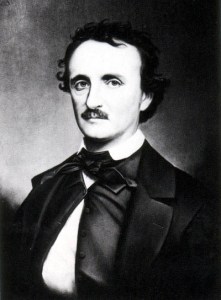
Edgar_Allan_Poe_portrait_B

Oscar Halling’s portrait of Edgar Allan Poe, late 1860s. Image in public domain at Wikimedia Commons [link]

‘The Masque of the Red Death’ narrates the grisly events that occur during the fictional reign of Prince Prospero. The story plunges us straight into a vivid description of the Red Death, a longstanding epidemic with high fatality rates and a gruesome effect on its victims, causing profuse bleeding, pain, seizures – and a mercifully rapid death.

“Blood was its Avatar and its seal”. The death toll is staggering: half the population have already succumbed by the beginning of Poe’s story.

Prince Prospero, who appears indifferent to the plight of his subjects, decides to “bid defiance to the contagion”, and with ample provisions, shuts himself and a thousand friends away in one of his sumptuous abbeys, to dance and merry-make in security from the Red Death. This seclusion continues successfully for the next six months, whilst those without fare poorly.

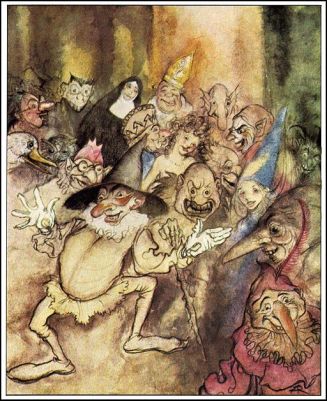
The Masquerade

A motley collection of masked guests, as illustrated by Arthur Rackham in “Poe’s Tales of Mystery and Imagination (1935). Image in public domain at Wikimedia Commons [link]

A masquerade! Prince Prospero certainly knows how to entertain, and throws an extravagant masked ball for his guests. The rooms are decorated vividly, as we enter a realm of metaphors. With some bizarre interior design, Prospero makes his tapestries and Gothic windows colour-coordinate; six rooms in blue, purple, green, orange, white and violet; a seventh of deep scarlet windows and black velvet walls, illuminated with fire. Ominous and wild, the revellers shy away from entering this last room: but each hour, stand transfixed in horror by the disconcerting toll of a pendulum clock from deep within the seventh chamber.

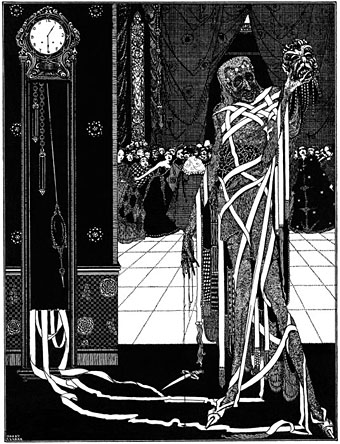
At the twelfth hour, as the clock chimes heavily and the waltzing falters, a masked figure fades into notice; a masked figure of unparalleled distaste, costumed as the Red Death itself. Tall, gaunt, corpse-like, phantasmagorical, daubed with blood, “besprinkled with the scarlet horror”: a vision of nightmare indeed!

The Red Death

“The dagger dropped gleaming upon the sable carpet” by Harry Clarke (1919). Image in public domain at Wikimedia Commons [link]

The encounter, suffice to say, with all its foreboding, ends badly, and rapidly, for Prince Prospero and his courtiers, who believed themselves safe against the Red Death. “One by one dropped the revellers in the blood-bedewed halls of their revel, and died each in the despairing posture of his fall… And Darkness and Decay and the Red Death held illimitable dominion over all.”

Well! Edgar Allen Poe isn’t renowned for his happy endings, so this gruesome end is probably to be expected. Just as well this is only a fictional disease….or is it?

In the wake of the recent devastating Ebola pandemics of Sierra Leone, Liberia and Guinea-Bissau, the parallels of the Red Death with one of the known haemorrhagic fevers can’t help but spring to mind. These haemorrhagic fevers include Ebola and Marburg fever, and have similar symptoms of fever, muscle pain, headache, nausea, then diarrhoea, vomiting and in some cases significant bleeding (WHO 2014).

As I suspected, I’m not the first to notice this: in fact, a published article in the journal ‘Emerging Infectious Diseases’ by Vora & Ramanan in 2002 explored this very question! The article is well worth a read and is available here. The authors postulate the mode of transmission of the Red Death (person-to-person, and possible aerosol inhalation) and the potential for either a very long incubation period for the Red Death microbe, or a new exposure to the abbey by an unspecified route.

So could Poe have modelled the Red Death after a known disease, or did he imagine up all of the gruesome features of the whole epidemic? Well, Poe probably have reasonable knowledge of yellow fever, a different type of haemorrhagic fever, – but one which causes liver failure and jaundice, neither of which are evident with the Red Death. Poe was also well aware of tuberculosis, which can manifest with coughing up blood from the lungs: both his mother and wife died of the disease.  Since Ebola, Marbug virus and another counterpart, Crimean-Congo haemorrhagic virus, all emerged in the 1900s, after Poe’s death, the parallel with the Red Death must be purely coincidental.

Whatever Poe’s experience of contemporary diseases, however, his description of the Red Death is vivid, realistic, and perhaps a warning of how complacency and seclusion in the interests of self-preservation are no match for a virulent pestilence with no respect for social contexts and hierarchy! Perhaps then, we should interpret Poe’s tale as a graphic and timely warning – public health initiatives, take note!

References:

Vora, S.K. & Ramanan, S.V. (2002) Ebola-Poe: A Modern-Day Parallel of the Red Death? CDC Emerging Infectious Diseases 8(12):December 2002

World Health Organisation (2014) Ebola Virus Disease: background and summary. Published 3 April 2014, available at: http://www.who.int/csr/don/2014_04_ebola/en/


A Prison in Paradise

Tsara’ath. Hansen’s disease. Galen’s elephantiasis. The Phoenician disease. These are some of the names used to describe one of mankind’s oldest afflictions:

Leprosy

As long as mankind has recorded its history through documentation and oral stories, leprosy has made its presence known: accounts are found in biblical texts, ancient Indian texts from 3500 – 4000 years ago, and of course in various works of fiction which I’ll be reading and blogging about in the near future.

In this post, we visit Hawai’i, and meet Koolau the Leper, in a short story told by Jack London, author of ‘Call of the Wild’ and ‘White Fang’. Koolau and his followers live on the island of Kauai. Times are hard: they have lived to see their lands taken and used for sugar-cane crops by the Americans, and now, infected with leprosy by the Chinese slaves brought to work on these plantations, Koolau’s community live in fear of being exiled to the leper seclusion zone on the island of Moloka’i.

We plunge into Koolau’s world to hear a rousing speech, as the leper prepares his followers for battle against the threat of quarantined imprisonment.

“Because we are sick they take away our liberty. We have obeyed the law. We have done no wrong..”

The group huddle together, drinking distilled ti-plant to the chords of a ukulele, and lose themselves to the sound and rhythm of dancing. Suddenly, a rocket flares. “It is the soldiers”, says Koolau. “Tomorrow there will be fighting.”


Molokai 1922

Kalawao, Moloka’i, ca 1922. Albert Pierce Taylor (1922) Under Hawaiian Skies: A Narrative of the Romance, Adventure and History of the Hawaiian Islands, Board of Education of the Hawaiian Kingdom, p. Page 348  Image in Public Domain, available on WikiCommons at: https://commons.wikimedia.org/wiki/File:Kalawao,_Molokai,_ca._1922.jpg

Jack London’s tale is based on historical events around the Leper War in 1893, occurring after the Republic of Hawai’i decided to isolate all lepers to the island of Moloka’i to try to preserve the Hawaiian economy. This is the story of Koolau the Leper’s last stand, as he fights to maintain the freedom of a community who have lost everything else – their land, livelihoods and health, to colonialism. He is willing to risk everything, killing the sheriff and several policeman who come to arrest him, and proclaiming “I am a free man… I have done no wrong. All I ask is to be left alone. I have lived free, and I shall die free. I will never give myself up.”

The descriptions of the effects of leprosy on Koolau and his community are graphic, suggesting a timeline of several years since the members of this community contracted the infection. “An arm-stump showed where a hand had rotted off”, “a space yawned in face where a nose should have been”, “hideously maimed and distorted”, “great ulcers and livid putrefaction”. London’s description of Koolau himself is vivid: “stumps of hands” and a featureless face “save for gaping orifices and for the lidless eyes that burned under hairless brows”.  Yet, despite these vivid, at times bestial descriptions, London humanises his characters through his depictions of their dancing and emotions.

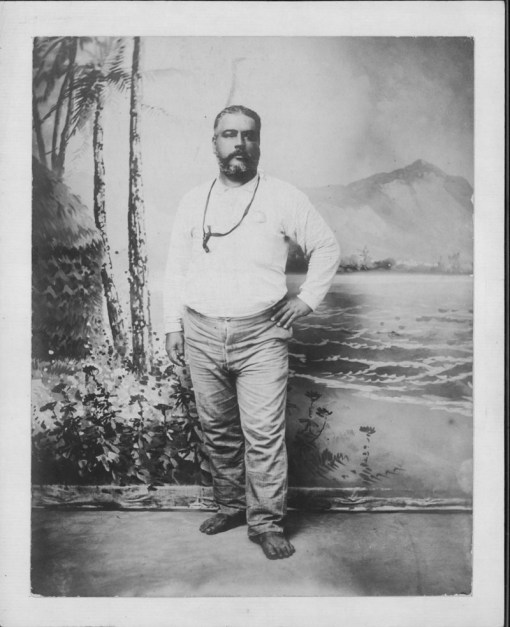
Koolau the leper.jpg

Koolau the Leper; Kalalau, Kauai. From WikiCommons, image in public domain, originally Hawaii State Archives, Call number PP-19-05-022; author/date not given. Available at: https://commons.wikimedia.org/wiki/File:Koolau_the_Leper;_Kalalau,_Kauai_(PP-19-05-022).jpg

The afflictions that London describes are consistent with those that might be seen with advanced leprosy. This picture of Koolau appears less graphic than the descriptions in this short story, but closer inspection of Koolau’s feet suggest scarring and patchy changes of the skin which may well be due to leprosy.

What is leprosy? The culprit organism is a small bacillus, called mycobacterium leprae. It is still not entirely clear how this gets transmitted between humans; the long-held belief that skin contact is responsible is not certain, and it has been recently suggested that leprosy is possibly transmitted by the respiratory route, that is, by breathing in the organism.

What are the symptoms of leprosy? Well, people with leprosy can exhibit symptoms in two different ways. The first, called ‘tuberculoid leprosy’, causes little patches of skin to become numb, lose pain sensation, and lose any overlying hair. The skin becomes raised with red edges. The second form, ‘lepromatous leprosy’, causes more visual changes, as the skin become thickened and folded where the organism invades. Over time, with severe infection, the infected individual can lose fingers, toes, nose, and other extremities. At one point, Jack London describes the lepers’ faces as ‘leonine’ – this is likely due to the lepromatous form of leprosy whereby the thickened skin creates coarse facial features, rather like a lion’s face.

Leprosy, by its effects on the nerves, makes the infected individual far more at risk of injuries, because they lack the sensation to feel pain or heat. For example, during battle, Koolau becomes aware of a scent of burnt meat – it is his fingers; anaesthetised, they feel no pain and he only notices their injury from the foul smell of his burns, sustained due to the heat of his rifle.

Who gets leprosy in the 21st century? Leprosy certainly remains a current disease, with over 200,000 new cases being reported each year (WHO 2017), especially in the Indian subcontinent, Brazil, SE Asia and across Africa, the Americas. Nowadays, it is not necessarily the terrifying disease it once was: treatment is more effective and leprosy can be cured. Nerve damage may remain permanent, however, and the treatment is a long course, lasting at least 6-12 months using a combination of anti-leprosy drugs to avoid resistance.

IMG-20170702-WA0012[1]

One of many works of literature to tackle the topic of leprosy, ‘Koolau the Leper’ depicts a dark time in Hawai’i’s history, and Jack London’s account appears fairly accurate from both a historical and medical standpoint. I highly recommend this short story, and in fact – lucky you! – it is available to read online at: http://www.online-literature.com/london/72/ Go check it out! For extra information on leprosy, the World Health Organisation is a great source of info, have a look at http://www.who.int/lep/en

Enjoyed this blog? Got a burning question about mycobacterium leprae? Get in touch below and stay tuned for more infectious reads!


Story of a Pandemic

First official Infectious Reads blog post! I thought I’d start by introducing you to a beautifully constructed little novel by William Maxwell. ‘They Came Like Swallows‘, first published in the 1930s, has autobiographical undertones from Maxwell’s own childhood, growing up in the American Midwest at the close of the First World War in 1918.

The First World War has barely ended when a new trouble spreads innocuously into the lives of the Morison family. We experience the Spanish influenza pandemic through the eyes of eight-year old Bunny, described as angel-like, a delicate, bullied child; thirteen-year old Robert with his toy soldiers; and their seemingly stern father James, whose worlds revolve around the mother of the family, the newly pregnant Elizabeth. At first a distant threat, noted with polite interest, ‘flu cases start to break out closer and closer to home: Chicago, St Louis, then Bunny’s school. Suddenly, the Morisons are presented with the stark reality of how fragile they are, as they each catch the highly infectious disease, and face the unthinkable, that the Spanish influenza may tear their family unit apart forever.

IMG-20170618-WA0003[1]


A time of horrors, this subtly written book presents the personal sufferings of people gripped by one of the most lethal pandemics in history. Maxwell’s own first-hand experience of losing his mother to the pandemic is explored quietly with themes of love, loss and grief interwoven with historical context.

Without spoiling the events of this delicate story – I’ll leave you to discover it yourselves – it is fascinating to see how Maxwell describes the illness; its symptoms, spread and in particular the public health response to its spread. No 24 hour news channels, trending Facebook feeds, Twitter storms to warn the world of the arrival of the Spanish ‘Flu! No: James Morison reads out a newspaper public service announcement to the family over dinner.

‘Spanish influenza’ resembles a very contagious kind of ‘cold’ accompanied by fever, pains in the head, eyes, back, or other parts of the body, and a feeling of severe sickness.  The Morisons hear that most cases recover rapidly within 3-4 days, but that some develop ‘pneumonia, or inflammation of the ear, or meningitis, and many of these complicated cases die’.

Maxwell’s descriptions are on point, including the specific complications which caused such a high death toll from a usually nasty, but rarely so deadly, virus. So, too, do the descriptions of Bunny being “adrift utterly in his own sickness” with his “eyes glittering with fever” conjure up the image of a child in the grip of the ‘flu: I can picture him, shivering and wrapped up in blankets as his mother Elizabeth and aunt Irene try to comfort him.

Why so deadly? The Spanish influenza was caused by the influenza A virus, in fact by the same strain that caused the swine flu pandemic in 2009: H1N1. Sure, the ‘flu still causes a number of deaths each year, particularly in older, or health-compromised people. But why so much deadlier than our usual ‘flu season’? Well, the ‘flu virus changes over time, and each year different strains emerge as the dominant strains. This is the reason why ‘flu vaccines are given annually, to cover the most problematic strains of that particular year.

In 1918, before ‘flu vaccines, before antibiotics to cover bacterial complications of influenza infections, and at a time when the health systems of the world were weakened by the demands of war, the influenza strain that emerged was much deadlier than usual. In total, an estimated 20-40 million people died, MORE than during the War itself. Strangely, a lot more young people succumbed to this strain of ‘flu than usual – we’re talking teenagers, young adults to mid-thirties. It’s thought that the Spanish ‘Flu triggered the immune system in a way that made it over-react, with deadly consequences from the excess effects to those with stronger immune systems. Another high-risk group were pregnant women: even if the mother survived, there were high numbers of babies who succumbed in the womb.

Where did it come from? The virus strain probably originated from China, and spread along trade routes; although according to Bunny’s Uncle Wilfred, the Spanish ‘Flu was brought in on German submarines. Whilst it was not actually used as a bioweapon, the ships coming to and from Europe and the US undoubtedly contributed to the spread of the virus, in addition to the celebrating crowds around Armistice Day. A perfect virus breeding ground…

‘They Came Like Swallows’ is sadly an accurate representation of the scale of devastation caused by the Spanish ‘Flu pandemic, made more real in the knowledge that it probably reflects true aspects of Maxwell’s own childhood. As ‘Flu Season’ gets underway here in Australia – the time of year when infectious diseases cause coughs and sneezes – I will be thinking of Bunny and Robert, thankful of some of the defences we have against similar pandemics, and mindful of how vulnerable we still are to this little virus.

Got a comment or question? Have you read ‘They Came Like Swallows’? Get in touch here!

← Back

Thank you for your response. ✨

Warning
Warning
Warning
Warning

Warning.

A library of lurgies

Bacteria. Fungi. Viruses and Parasites. These little beings surround us, live on us, often make us sick and sometimes change history! Microbes are so contagious, they’ve infected our culture and can be found lurking in classic fiction, modern literature and other forms of art and expression.

The world our ancestors lived in, not so very long ago, – a world without antibiotics and without understanding of germ theory, was often afflicted by serious epidemics and frightening plagues. Nowadays, we have a deeper understanding of how these wee bugs cause sickness, although if we’ve learnt anything from recent epidemics like Ebola, it is how vulnerable we still are.

This blog is my way of exploring how people in the past and present experience the microbial world, through the glimpses we glean from stories and tales based on true or imagined events. Stay tuned for infectious reads about plague doctors, sci-fi epidemics and how your favourite literary characters got their chilblains, poxes and lurgies!